


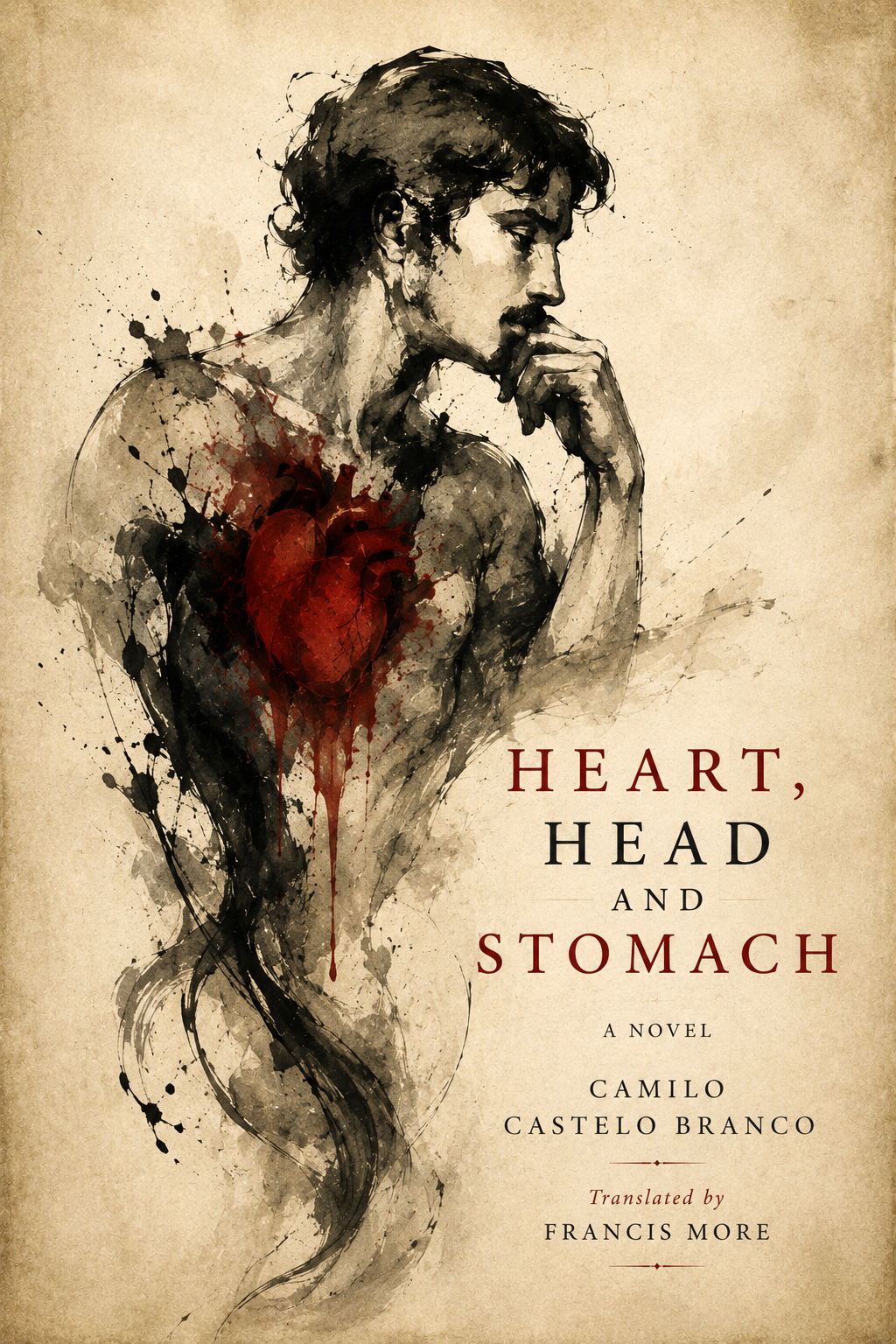
Camilo Castelo Branco · Translated by Francis More
 Heart, Head and Stomach

Fifty years ago this fall, the Montreal Canadiens began a three-season run that now reads like a story from another sport — or another universe. Across 1975–76, 1976–77, and 1977–78, they won 58, 60, and 59 games, swept two of their three Stanley Cup Finals, and lost only eight games in their best year. Nine of those players would end up in the Hockey Hall of Fame, plus their coach. Our new book The Heights Team argues it's the greatest sustained excellence hockey has ever produced. It's hard to find a counterargument.
But here's the part that sits with us: we built the modern game to make that impossible on purpose.
The salary cap, the draft, free agency, revenue sharing — every mechanism designed to create parity also quietly installed a ceiling on greatness. That was the point, and mostly it worked. The league is more competitive now, more fair, more genuinely uncertain week to week. But something was traded away, and I'm not sure we've ever admitted out loud what it was.
It was the permission to be extraordinary long enough that it stopped being a streak and became a culture. A dynasty isn't just talent; it's an idea a place can hold for years — a standard so high that people absorb it before anyone explains it. Those Canadiens didn't just win. They defined an identity a whole province and a whole country still argue about, five decades later.
The word matters because the idea leaks beyond the rink. We use "dynasty" for families, for companies, even for bands now. What we're really naming is an old longing: for something built to last, in a world that increasingly rewards the disposable.
We don't actually want the old economics back. That team won partly because it could outspend and out-stockpile everyone else, and there's nothing romantic about that. But I miss what they represented — the belief that a team, or a company, or a person, could keep getting better not for a season, but for a decade.
We got fairness, and we gave up the chance to watch greatness endure. Maybe that's a trade worth making. Maybe it isn't. But we should at least say out loud that it is a trade.
Is there anywhere in life — work, family, community — where we'd still rather protect a dynasty than accept parity?
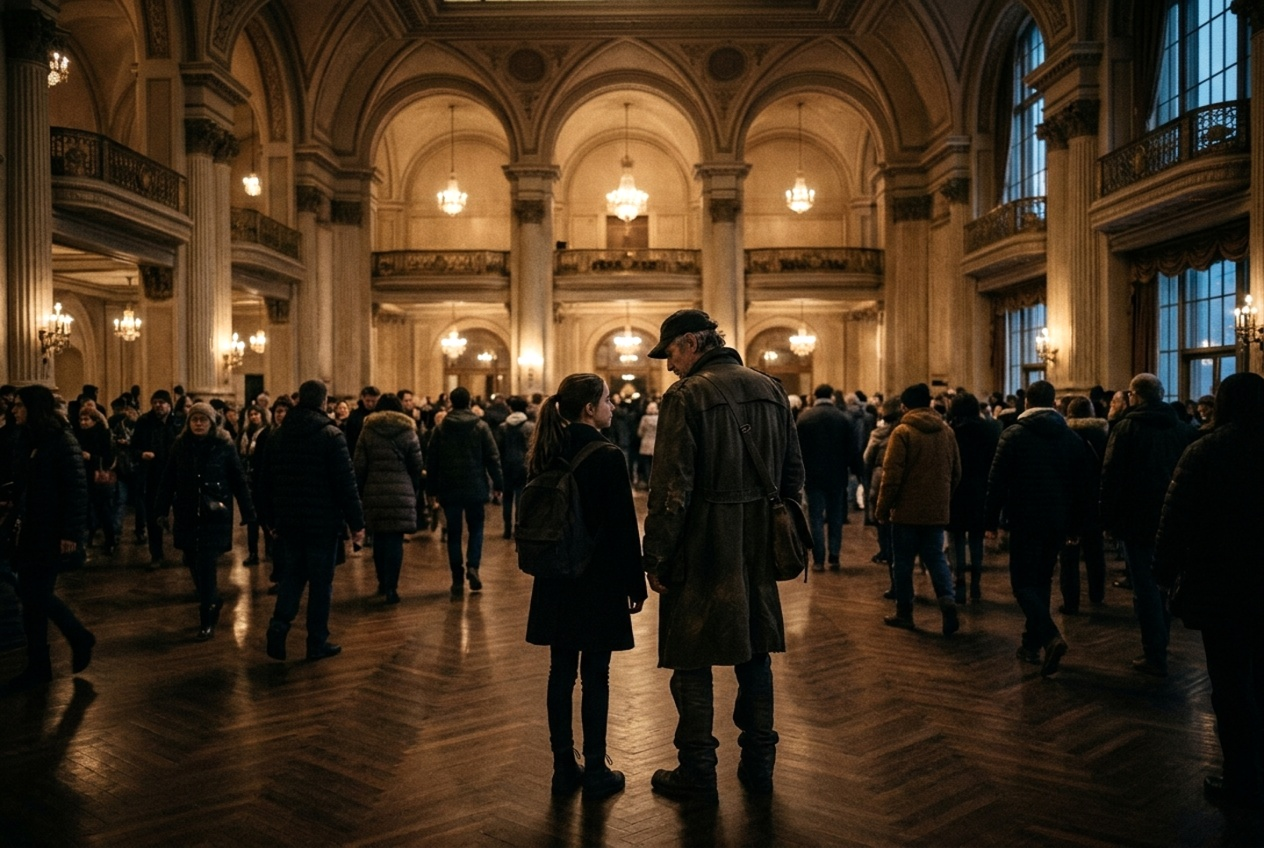
Imagine a city where survival is arithmetic. In near-future Montreal — after Quebec has separated and the economy has collapsed into recession — the Imperial Meridian Hotel on Sherbrooke Street has been reborn as the Ballroom, one of about a dozen gambling halls in the city. Every day, displaced people pay a ten-dollar entrance fee for a programmed tablet, then roam an enormous hall that stretches like a cathedral, trying to guess the exact number of players inside. When the officials hold one of their randomly timed counts, anyone whose guess matches the total wins the jackpot. A whole society's desperation, distilled to a single number.
At the center of this world are a father and a daughter. Bella is sixteen and left school after ninth grade to help her father. Walter is a Canadian Army veteran, scarred by Afghanistan; counting players in the Ballroom is the only work he could find after his discharge. "Here, Walter and Bella spent their days counting players who simultaneously counted them". Everyone in the hall is running the same estimate — counting the people who are counting them back. Human beings, reduced to units in a moving sum.
The game feels real, and not just as dystopian scenery, because its author actually knows the mathematics. Abraham Boyarsky is a novelist and a mathematician — for years Professor of Mathematics at Concordia University in Montreal, now retired from that professorship. When Walter explains his method, it reads like genuine estimation theory. He paces out a 400-square-foot zone — one-fiftieth of the 20,000-square-foot floor — counts the players inside it, multiplies by fifty, then refines. "It's about inference," Walter had once told Bella. "About knowing how people move when they're hungry. About subtracting the ones who ghost out. It's as much about what you don't see". The game, the book insists, is more than luck: it is pattern recognition, intuition, and much more.
But the novel's true subject is what refuses to be computed. Beneath the counting lies grief. Walter's war trauma follows him through the hall, and so does the memory of Elena — Bella's mother, an eighteen-year-old waitress when Walter met her in the Ballroom twenty years earlier, later lost to painkiller addiction and found lifeless in the kitchen by Bella. No estimate covers that. He lights a candle for his comrade Sam Dichter, killed by an IED in Afghanistan — a small ritual of remembering what the numbers erase. The love between Walter and Bella is the one thing in the book that cannot be reduced to a probability. "Don't let love become a cage," her mother said. "Not even your father's love". And when the Ballroom's owner tries to recruit Walter as an informant, Walter refuses — choosing instead to assemble a small team and try to beat the game on his own terms.
This is a dystopia that is really a question about value — what a person is worth when a system can only see them as a number to be guessed. The Ballroom is no decaying ruin; the floor is mopped three times a day, kept pristine because the place is still open for business. The horror is not in neglect but in how thoroughly order and counting have become the same thing. And still, a line of graffiti reminds the players that they will survive together — a promise the arithmetic cannot touch.
When have you been reduced to a number — and what in your life refused to be counted?
Page 1 of 2
Montreal | New York
1-888-936-3668
info@8thHousePublishing.com